Today's entry comes from Skyler and is a beautiful combination of food insight, nostalgia and history. For the record, Skyler owns neither a microwave or dishwasher.
We are experiencing a January thaw
in Ohio
today. I actually when outside and
pulled some weeds in my flower beds and garden just to say that I did that once
in January. As I was working outside I
felt the urge that every Mid-Westerner feels on a day like this: spring will be here soon and I will be able
to plant my garden and wait for the annual bounty. It made me think of summer cook-outs, camp
fires with s’mores and pudgie pies and having a nightcap on my front porch all
of which are more fun to share with a group of family or friends. The
reality is that the weather forecast says that by the middle of the week the
temperature won’t get out of the twenties and there is a chance of snow. So I made out my grocery list and trekked to
the supermarket where I had my pick of fresh produce and aisle after aisle
(yes, I am an aisle shopper) of products to cook virtually whatever my winter
heart desired.
Getting
together with friends to eat is probably my favorite pastime. There is an ease
when we get around the table.
Conversation flows (as does wine) and there is a level of appreciation
for not only the food, but also the person who prepared it and the ingredients
involved. How a group of people in their
early 30s became such want-to-be foodies is interesting to me when you consider
that when we met our freshman year of college we were happy with microwave
Raman Noodles, dorm food and the cheapest beer on the shelves. The only consistent behavior is the joy of
sharing the experience of food together.
This appreciation then could come
from a few places. Many of us came from
homes where meals were part of the daily routine. Food was prepared. Tables were set (although only two of us used
cloth napkins, but that is another post for another day). Conversation was expected and then we helped
clean up. The whole processes might take
twenty minutes, but in that time we shared the events of our day and laid plans
for the day ahead. If this were the only
ingredient in our love of food and friends it might be enough. However, it does not allow for the fact that
we have such an appreciation of the food that we eat and the craft of putting
it together.
Enter the “culture of foodie-ism”. While we were in college the Foodnetwork came
into its own, and we could simply go online for any recipe we desired to
try. I learned how to cook making the
casseroles and comfort foods of my Midwest childhood. Butter?
Gravy? Table salt? Check. Check. And double check. We aged into the foodie lifestyle after
seventy years of other people preaching that there was more to life than canned
or frozen vegetables and basic cuts of meat where your cooking choices could be
boiled, baked or grilled. Suddenly there
was a desire to braise, deglaze and rest. We could make the food of America because
it was in our supermarkets and we had traveled and tasted it or had seen it
made on TV so we knew what to expect.
The history of regional food to any American table is one that
occasionally makes me pause and appreciate how far we’ve come and a little of
what we’ve lost on the way.
During
the Great Depression of the 1930s, the Roosevelt Administration put people to
work in a variety of ways. From the
conservation efforts of the CCC and the controversial programs to fight profit
losses for farmers with the AAA, the New Deal impacted almost all parts of
society. In my home town, the WPA built
a swimming pool for the community; quarried from a limestone quarry by local
labor. However, what I find most unique
about these governmental programs is their emphasis on the arts as well. Dorthea
Lang was employed to photograph the plight of the migrant Americans displaced
by the Dust Bowl and dozens of writers were given the task of recording the
regional cuisines of America.
That
same WPA that built the swimming pool in my town also headed up the effort to
chronicle America’s
food. The reports were collected, but
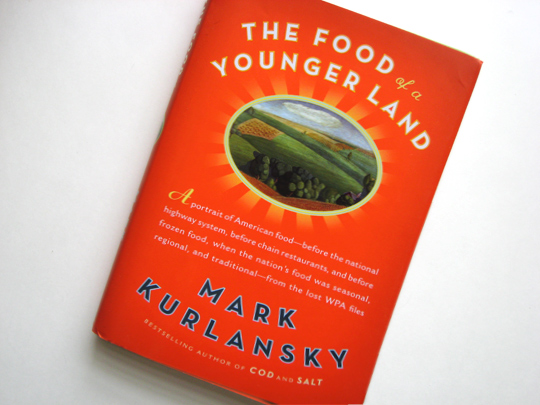
never published until 2009 when Mark Kurlansky compiled them in his book The Food of a Younger Land. He takes pains to point out how we ate in a
country before the interstate highway system and its endless exit ramps full of
chain restaurants. (Charles Kuralt said,
“Thanks to the interstate highway system it is now possible to travel from
coast to coast in America
and not see anything.”) It was an age
before frozen foods when all food was “seasonal” because that’s what was
available and there was no chain restaurant for constancy. Of course even by the 1930s food was not as
regional as it had been fifty years before.
Railroads and refrigerated cars had been used for decades to take the
produce of New England, corn form the Midwest and beef from the Chicago packing
plants and ship them coast to coast.
The
book itself is full of sketches of drug store lunches, automats, clambakes,
Mississippi fish fries, “Georgia Possum and Taters,” “Indiana Persimmon Pudding,”
“An Oregon Protest Against Mashed Potatoes,” the Texas Chuck Wagon and
“Oklahoma Prairie Oysters”. Reading it,
you get the feeling that these meals were special for two reasons. The first was that they were social. Some were special occasions while others were
simply lunch stops or weeknight dinners, but they were communal: not eaten
alone. The second was that they were
seasonal. In an age before overnight
shipping, refrigeration and mass production, some of these meals were prepared
once a year and that alone was cause for a celebration.
In
the years after the Great Depression, through the Second World War and into the
conformity of the 1950s, America’s food became as bland as the plot lines of
most TV sitcoms of the era. Vegetables
were frozen or canned and many meals were more assembled than cooked. America became a foodie
wasteland. There was The Man in the Gray
Flannel Suit and he ate the same dinner as his neighbors, just as he wore the
same uniform.
Enter,
Julia Child. The food culture that my
friends and I inherited owes almost everything to the great prophetess. Volumes have been written on what she did for
America’s
diet and its food appreciation. She
turned the establishment on its head in an age of television for every “servant-less
American cook”. Her revolution was total.
Forty
years later, we tune in to watch Rachel Ray shout at us for 30 minutes to show
us how easy it was to get a meal on the table any night of the week. (Seriously, Rachel, if it takes 45 minutes
that’s fine. Just stop shouting.) We could make a meal with five ingredients or
less from some cooks and even do it “Semi-homemade” (don’t even get me started on that show…) But in the mix of all of this, something is
missing that the WPA files of the 1930s and Julia Child encompassed, and that
was the fact that food is an occasion. It should be enjoyed and shared. (The only one I consistently hear stating
this fact on TV is Ina Garten.)
Due
to the conveniences of the 21st century, food is much less
regional. We have family friends who do
lobster boils and clambakes in Cleveland.
(Trust me; they aren’t getting any of it from Lake Erie). In my opinion, this is the aspect of the
foodie-revolution that is the most exciting and the most disconcerting. It is wonderful to recreate Kansas City
barbeque at home or to pour Vermont maple syrup over pancakes on any given
Sunday morning in San Fransisco, but when we do that, I can’t help thinking
that the food loses a bit of its special quality. Reading those WPA papers, the reader senses
the excitement of a meal prepared only once or twice a year. It was a time to pause and be appreciative of
what you were about to eat.
Today
my food is not seasonal. I know where my
bell peppers were grown and the farm where the cow was milked for the cheese I
just bought. However, the tomatoes that
I get out of my garden from July through September make me a snob for hot house
varieties that I see at the market and I do admit to changing by diet in the
summer when the bounty is coming from my vegetable beds. So as I write this on a January thaw day that
gives every Midwesterner the false hope that spring and planting season are
right around the corner, this foodie is going to plan some menus for my own
dinners this week that combine the best of modern conveniences and regional
eating. Roasted potato and leek soup
(Thanks, Ina!) for Sunday, chicken and noodles with celery and carrots for
Tuesday, and a bolognese for Thursday.
Come and get it! Dinner’s
served.

The best meals are enjoyed with friends at a round table -- a friend once told me they're more conducive to conversation -- and I couldn't agree more!
ReplyDelete